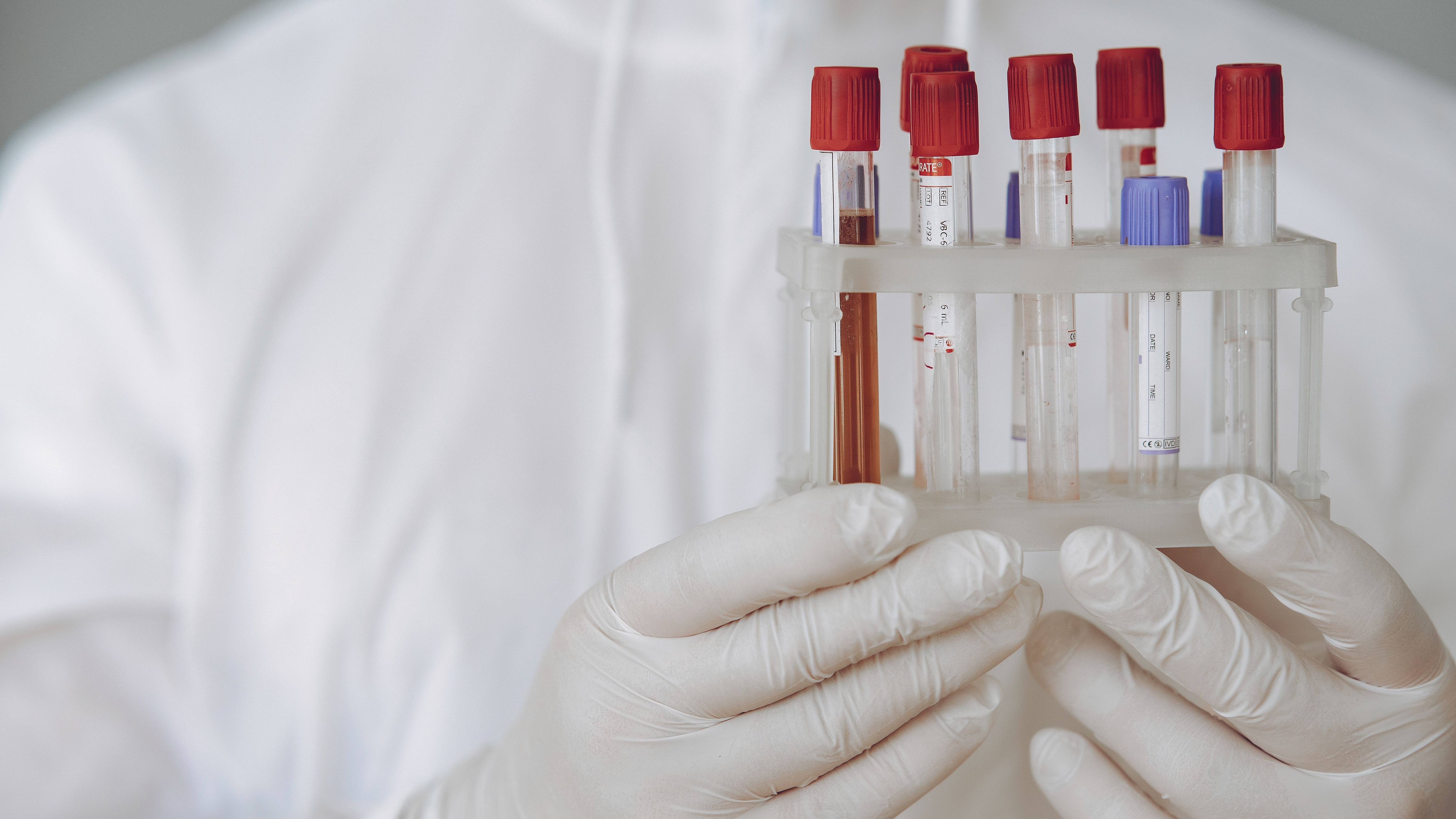
The global pharmaceutical supply chain, once a backdrop to the primary work of discovery and development, has been thrust into the spotlight. A convergence of events—the Covid-19 pandemic, geopolitical tensions like those reflected in the US Biosecure Act, trade tariff uncertainties, and persistent logistical bottlenecks—has exposed critical vulnerabilities. For biotech and pharmaceutical companies, especially emerging entities, these disruptions are not merely operational headaches; they represent existential threats to development timelines, clinical trial integrity, and ultimately, patient access to new therapies. The complexity is amplified by the industry’s unique regulatory landscape, where the quality and provenance of raw materials are inextricably linked to patient safety and regulatory approval.
Building a resilient supply chain is no longer a secondary logistics exercise but a core strategic imperative. It requires a nuanced balance between cost, quality, regulatory compliance, and risk mitigation, all while navigating a development lifecycle that can span a decade or more. The strategy must evolve from early-stage research, where speed and flexibility are key, to late-stage commercial readiness, where robustness and redundancy are paramount.
In this complex environment, the insights of seasoned operations leaders are invaluable. To delve into these critical issues, Drug and Device World spoke with Kum Ming Woo, Senior Vice President of Global Operations at Vector Labs. In his role, Woo is responsible for ensuring the reliable supply of high-quality research reagents and components essential for scientists tackling challenges in genomics, oncology, and infectious disease. His experience offers a pragmatic, big-picture perspective on how companies can strategically secure their supply chains from preclinical research through to commercialization.
The interview has been edited for clarity, consistency, and length.
Phalguni Deswal [PD]: For a small biotech, cost is always a major consideration. But in today’s volatile geopolitical and economic climate, what other critical factors should they evaluate when selecting suppliers?
Kum Ming Woo: Absolutely, everyone, large or small, gets hung up on cost because it’s the most obvious metric. However, my primary recommendation is that customers should focus on quality and availability first, with cost becoming the final negotiating point. Put simply, getting something cheap is meaningless if you can’t get it at all, and a low price is no bargain if the product isn’t fit for purpose in the first place.
This is a general business principle, but it’s acutely true in pharma. We saw this during the pandemic when life science supplies vanished. Even now, focusing on securing a reliable supply of a quality product must be the priority. You can spend weeks haggling over a few percentage points on price, only to find all available inventory has been snapped up by others. Establish your quality and supply reliability first, then discuss cost.
PD: That ties into a concept of “stage-appropriate” strategy. What does that mean for the supply chain? When should a company use research-grade materials versus investing in full GMP (Good Manufacturing Practice) quality?
Kum Ming Woo: This is crucial. There is a misconception that regulatory agencies like the FDA are rigid from the start. The entire clinical trial process exists because the FDA expects product design and processes to evolve over a product’s lifecycle. Companies should embrace this.
Early on, perhaps when you are still selecting a target compound or designing toxicology studies, your approach will change. You want focused studies to answer specific questions. At this stage, using Research Use Only (RUO) or non-GMP materials is not only acceptable but often the smartest path. For instance, to answer, “Does my compound demonstrate the intended biological effect?” you don’t need a $100,000 GMP batch. You need a well-characterized research-grade material. Similarly, for early animal toxicity studies, you often need low-endotoxin material, not necessarily full GMP. This saves significant time and money, allowing you to fail fast and cheaply if needed, preserving resources for more promising candidates. The key is to run small, focused studies, not to bundle too many objectives into one overly complex and expensive trial.
PD: So, what triggers the shift to GMP materials? Is it scientific, financial, or regulatory?
Kum Ming Woo: The inflection point typically occurs between Phase II and Phase III trials. By then, you have gathered preliminary evidence of both safety and efficacy. You are moving into larger human studies and starting to think seriously about commercialization. The financial investment becomes substantial, and it starts to make sense for your material to “do double duty.”
A common strategy is for one of your late-phase clinical trial batches to also serve as one of the three validation batches required for commercial launch. At this stage, you need large volumes, you’re more confident in the molecule, and you are planning for the future. In the early phases, you don’t know if the material is safe or effective enough to justify that dual-purpose planning. The transition is driven by this combination of regulatory expectation for greater control, the scale of need, and the strategic move toward commercialization.
PD: Let’s discuss external shocks, like the BioSecure Act, which came into effect in December 2025. It forced a lot of re-evaluation. How should a company distinguish between a transient political event and a genuine, lasting shift that requires a supply chain overhaul?
Kum Ming Woo: It is a tough set of decisions. My analogy is that drug development is a 10-year cycle. Ten years ago, I did not have kids; now I do. A lot can change. The BioSecure Act emerged as the industry was exiting the pandemic’s “everything is urgent” mindset. The key is to take a breath and evaluate your strategy against a 10-year horizon.
If you were an early-stage company using international partners for screening, that likely remains a sound strategy. For a late-stage company, the Biosecure Act didn’t mandate anything that shouldn’t already be best practice. If you were on the precipice of launch and discovered 100% of your raw materials came from a single region—whether China or the San Francisco Bay Area—that was a fragile strategy. The Act merely exposed that vulnerability.
A sound, long-term strategy inherently insulates you from these point events. No single geopolitical event should fundamentally alter a well-constructed foundational approach. If it causes you to look harder at your chain, that’s fine, but frantic mid-course changes often aren’t necessary if the core strategy is robust.
PD: Building on that, what should a “robust core strategy” entail? How should companies think about geography, site selection, and transparency to mitigate political or trade shocks?
Kum Ming Woo: Our industry is fortunate because pharmaceuticals are critical to health, which has largely shielded us from the worst of tariffs—so far. The principle, however, is diversification across independent geographic regions.
Early on, when you need milligrams or grams, geography is less critical than quality and availability. As you near commercialization, best practice is to source from at least two of the world’s major regions: the Americas, Europe/Middle East, and Asia-Pacific. Don’t put all your eggs in one basket. If you source 50% from Asia and 50% from North America, an event in one region does not halt your supply. It also distributes potential cost impacts.
The goal is to identify and eliminate single points of failure. This is not just about geopolitics; it’s about storms, port closures, or local issues. Having a multi-region strategy is the most effective buffer against any unexpected shock.
PD: You have mentioned the value of suppliers as “strategic partners” versus transactional vendors. What differentiates a partner?
Kum Ming Woo: The biggest difference is the ability to collaborate and solve problems in real-time. Drug development is a process of discovery. You will find a new impurity, encounter a manufacturing deviation, or need to revise a test method based on new data. A transactional vendor is an order-taker: “Tell us exactly what you want, and we’ll do it.” It might be cheaper.
A strategic partner brings additional brains to the table. They’ve seen similar problems before and can work with you to find a path forward, often saving invaluable time. In drug development, time is usually the limiting factor, not money. A partner who can help you navigate unexpected challenges is worth the investment. It’s about problem-solving together, not just executing a purchase order.
I would emphasis that you do not have to solve every supply chain problem alone. Leverage your network and your suppliers. A challenge that is novel and daunting to you is likely something your strategic partner has encountered multiple times. One of the greatest values a partner offers is the experience and proven solutions they can share. My encouragement is to engage openly with your supply chain; collaborative problem-solving is at the heart of successful drug development.
PD: Looking ahead at trends like AI, nearshoring, and enhanced traceability, what’s your top advice for companies building a supply chain for the next 5-10 years?
Kum Ming Woo: My biggest advice is to proactively identify your single points of failure. Conduct a rigorous assessment: Where do you have a sole supplier for a critical material? Where is there only one manufacturing site capable of a key step? You won’t be able to fix everything immediately, especially at a small company, but you must know your vulnerabilities.
Once you know them, you can prioritize and develop mitigation strategies. Sometimes the solution is dual-sourcing across regions. Sometimes, if qualifying a second vendor is impossible, you might need to hold strategic inventory or collaborate with that sole supplier on their own business continuity plans. The critical mistake is being unaware of these choke points until they fail and surprise you years into development. Foreknowledge is power.