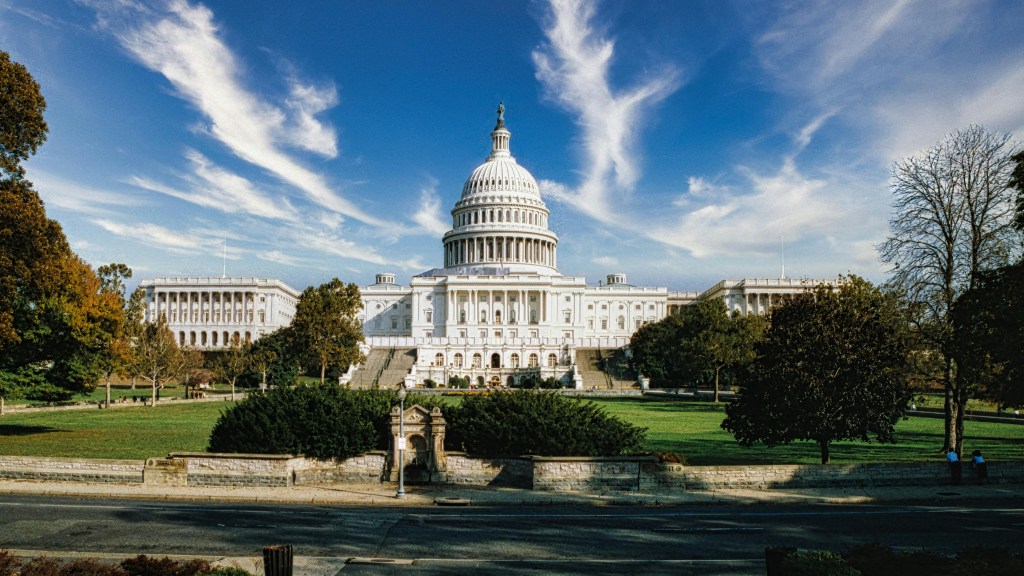
Last Thursday, the US Congress approved—and President Trump signed on July 4—the One Big Beautiful Bill Act (OBBBA), a sweeping legislative package presenting itself as a play for energy independence and economic growth. However, emerging analyses from independent research firms and think tanks portray a starkly different narrative. The act is poised to significantly increase greenhouse gas (GHG) emissions, undermine public health, and reverse critical environmental justice gains—all while setting back US climate commitments and global leadership.
One of the clearest warnings comes from the Rhodium Group, whose analysis indicates that under the House version of the bill, US emissions in 2035 would rise by 500 to 730 million metric tons compared to current policy trajectories. This surge effectively wipes out momentum toward decarbonization and resistance to climate change. Modeling from the REPEAT project further supports this dire outlook, projecting that GHG emissions could increase 25.7 percent under the House version and 25.2 percent under the Senate version by 2035, relative to Biden-era policies.
Moreover, the high-emissions forecast under the House bill suggests a mere 4 percent drop below 2005 levels by 2035—essentially a climate stalemate rather than progress. The low-emissions scenario only reaches 39 percent below 2005 emissions, still falling short of what climate experts consider necessary to meet US commitments under the Paris Agreement.
Health Impact of Rising Emissions
Equally concerning are the findings from Energy Innovation, which quantify the emissions and public health impacts of OBBBA. Their model forecasts 160 million metric tons of additional CO₂ equivalent emissions by 2030, escalating to 310 million metric tons by 2035—a surge equivalent to adding 72 million gasoline-powered cars on America’s roads. These additional emissions contribute to increased air pollution, which is projected to cause 430 additional premature deaths annually by 2030, climbing to 930 by 2035. These figures underscore a public health emergency intertwined with the act’s climate policy rollback.
The Energy Innovation report details the regional impacts of the Act. In Texas, OBBBA is expected to raise emissions by nearly 9.7 million metric tons CO₂e in 2030, and over 91 million metric tons by 2035, the equivalent of introducing 20 million more cars, resulting in 156 premature deaths annually by 2035. In Kentucky, emissions are projected to increase by 2.9 million metric tons in 2030 and nearly 12 million by 2035, leading to 14 additional deaths annually by 2035. These statistics reveal that the act’s environmental cost is unevenly spread, placing disproportionate risks on communities in fossil fuel-heavy regions.
Impact on clean tech investments
The ramifications extend well beyond emissions and mortality. OBBBA rescinds numerous incentives that underpin the country’s clean-energy transition. It phase‑outs tax credits and public funding for solar, wind, battery storage, electric vehicles, and energy-efficient technologies. This dismantling of clean energy mechanisms threatens to strand billions in planned private clean‑tech investments—reportedly around $522 billion nationally—and jeopardizes projects already announced between 2022 and early 2025. Lost confidence among investors could ripple across domestic clean‑tech manufacturing, compounding the Act’s long-term consequences.
By rolling back the clean‑energy framework established by the Inflation Reduction Act, which models showed could reduce emissions by 43 to 48 percent below 2005 levels by 2035, OBBBA not only forfeits potential emissions benefits but also cedes the US’s clean‑energy leadership on the world stage. Analysts warn that this shift advantages global competitors like China, which have scaled up solar, batteries, and electric vehicles under robust subsidy regimes.
The Act’s substantive shifts also include expanding fossil fuel development. OBBBA encourages expanded oil and gas leasing, reduced methane royalties, and expedited pipelines and LNG export infrastructure—moves that further entrench the country’s reliance on carbon-intensive resources.
These trends have wider policy repercussions. The retreat from climate commitments and clean‑energy investments harms environmental justice. Renewable programs with benefits for disadvantaged communities are being scaled back, while fossil fuel investments—often sited in low-income or minority regions—are fast-tracked. This not only intensifies air pollution and mortality in vulnerable areas but also exacerbates long-standing inequities.
A retreat from renewable energy
Critics argue that the act’s supporters are betting on fossil fuels and nuclear to provide reliable “baseload” energy at cheaper rates. The US Energy Secretary Chris Wright recently argued that unreliable solar and wind intermittency hampers a consistent energy supply and that coal, natural gas, and nuclear providers offer more dependable power. However, that sidelining renewables hampers grid flexibility and resilience, and delays modernization efforts critical to navigating climate volatility and rising extreme weather risks.
Ultimately, OBBBA represents a strategic retreat from a sustainable energy future. Instead of accelerating the clean‑energy transition, it propels the US backward, locking in higher emissions, more pollution, increased mortality, and elevated energy costs. It threatens economic growth, displaces private clean-energy investments, and downgrades US credibility in global climate leadership.
Unless reversed or met with compensatory policies, the One Big Beautiful Bill Act imperils the US efforts to achieve its climate pledges and protect public health. America may now face a more carbon-heavy infrastructure legacy—one that future lawmakers will struggle to unravel.


